APPROVED
The last time you paid for something, you felt nothing. No wince, no pause, not even a beep you remember. That numbness took thirty years to engineer, and it is the most profitable feeling ever built. This book is the story of who built it, and what it costs you.
Available in paperback and Kindle.
Three decades inside the payments industry · 36 countries · field research with over 50 merchants

You know exactly which coffee shops ambush you.
THE TIPPING SCREEN
Three buttons, 20, 25, and 30 percent, for a muffin lifted from a case and handed across four feet of marble. You've felt the line behind you decide for you. This book explains who designed that moment, and why it was originally an act of mercy.
"THAT'S WEIRD, RUN IT AGAIN"
The last time your card declined, you blamed the machine, then your bank, out loud, to a cashier who was neither. A decline is a small public verdict. Learn what it costs everyone standing at that counter.
THE 3 A.M. PAYMENT
Money now leaves you with no gesture at all: silently, at three in the morning, while a rewards app celebrates. Tonight, open your banking app and count the lines that move without you.
card payments in the U.S. since you opened this page, at a rough industry rate of four thousand every second. Did you feel any of them?
Feel what a tap feels like. (Spoiler: nothing.)
The book calls it the anesthesia. Take the dose yourself: keep tapping the card, and watch the only place your spending ever becomes visible: the receipt.
Tap the card. It costs you nothing real, which is exactly how it always feels.
EVERY REGISTER, USA
MERCHANT COPY · CUSTOMER NUMB
NO CHARGES YET. TAP THE CARD.
YOU FELT: —
THANK YOU, COME AGAIN (YOU WILL)
Read the chapter behind the experiment.
Download “The Pain of Paying” immediately, then decide whether the rest of the book belongs on your shelf.
Your complimentary chapter is ready.
Download Chapter 1Lines you'll want to read aloud to someone.
Scroll, copy, or share. Every quote links back to payonpurpose.com.
The person who pays for everything in this book is you. It seemed only fair to write it that way.
Computers move money. What the industry actually moves is the feeling of money leaving, and that distinction, small as it sounds, explains almost everything you are about to read.
A coin is a strange object when you look at it honestly. It’s a promise made of metal: worthless to eat, useless to wear, valuable only because everyone within a thousand miles has agreed to keep believing in it tomorrow.
…a four-second authorization is a held breath and a decline is a small public verdict…
Merchants are trusting by profession, busy by necessity, and alone with decisions they never trained for, which makes them the most persuadable customer in America.
Merchants say price. They buy trust, they stay out of habit, and they leave over betrayal, with price serving mostly as the language everyone has agreed to hold the conversation in.
The ledger of a relationship is kept as peaks and endings, which means every service company on earth is one bad Saturday from erasing its own history, and almost none of them know it.
The real answer is colder and more interesting: opacity survived because clarity was expensive, and confusion was the subsidy that paid for everything clarity would have required.
The perfect world of payment acceptance is not the frictionless one. It is the truthful one… Perfection, in payments, is not the absence of pain. It is pain that tells the truth.
The human mind already leans toward self-congratulation after a purchase; psychologists call it choice-supportive bias, the quiet rewriting of every decision into a good one. The industry took a bias and gave it a sound effect.
Four parts. Every seat at the counter.
The Cardholder / The Anesthesia Project
The pain of paying, the terminal you've never really seen, the tipping screen, and the money that now leaves you invisibly. Every experiment needs a first subject, and the industry chose you.
The Merchant / The Most Persuadable Customer in America
The fifteen-minute signature, the statement nobody reads, a thousand micro-betrayals, and the free terminal that is anything but. The barber and the food-truck owner meet the machine built to sell to them.
The Machine / The Industry Looks in the Mirror
The most behaviorally optimized sales machine ever built, why nothing ever dies in payments, and the deal nobody prioritized. The industry gets the same honest examination it gives no one else.
The Reckoning
Frictionless for whom? Designing honest friction, the perfect transaction, and the last swipe. Pain is information, and this part is about getting yours back.
Read "The Pain of Paying" free.
Get the complimentary PDF immediately, plus occasional field notes on the psychology of paying. No spam, no subscription traps. This book is literally against those.
Your complimentary chapter is ready. A copy of the link is also heading to your inbox.
Download Chapter 1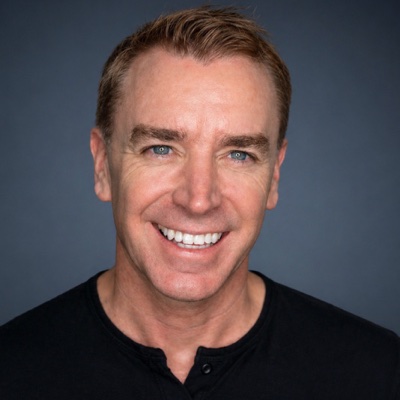 BL
BLBen Love
Ben Love, author of The US Payment Handbook, spent three decades inside the payments industry, across thirty-six countries and every seat at the table: design rooms, ride-alongs with terminal salespeople, and face-to-face field research with over fifty merchants, from coffee roasters to construction contractors. Approved is what he learned about the machinery that moves your money, and about the feeling that machinery was built to remove.
Contact: team@payonpurpose.com